NEC acknowledges the ancestral and unceded territory of the Coast Salish Peoples, including the host Nations xʷməθkwəy̓əm (Musqueam), Skwxwú7mesh (Squamish), and səl̓ílwətaʔ/selilwitulh (Tsleil-Waututh) Nations.
The Associate Degree honours the cultural knowledge that students will bring into the classroom by focusing on the prevention of genocide and healing. Cultural awareness, truth-telling, and critical thinking are central learning outcomes. The program enhances academic skills by focusing on the multidisciplinary approach of Indigenous Studies, including knowledge discovery and dissemination through ceremony, arts, and relationships.
Program Highlights
Duration: Two Years Year 1 – 450 hours
Year 2 – 450 hours
Delivery Method: Online Asynchronous Note:Asynchronous delivery means classes run more flexibly, with students accessing class materials during different hours and from other locations. A weekly schedule is followed in each course.
Intake: Fall
Schedule: Students can expect 3 hours of lectures per course each week, totaling approximately 15 hours. In addition, each course requires 1.5 to 2.5 hours of weekly reading and participation in one forum discussion per week.
This program is offered under the written consent of the Minister of Post-Secondary Education and Future Skills effective (June 21, 2025), having undergone a quality assessment process and been found to meet the criteria established by the minister. Nevertheless, prospective students are responsible for satisfying themselves that the program and the degree will be appropriate to their needs (for example, acceptable to potential employers, professional licensing bodies, or other educational institutions).
CAREER OPPORTUNITIES
Potential areas of employment for graduates in Indigenous Studies include public administration, industry liaison, entrepreneurship and community agencies. Areas of general employment for holders of an Associate of Arts degree include entry-level and supervisory positions across various industries.Graduates will thrive in positions that require a combination of critical analysis, composition, and intercultural communication, such as advocacy, policy, government services, community services, human resources, arts and heritage, and communications. Potential areas of further education are Indigenous studies, law, anthropology, history, sociology, economics, linguistics, geography, political science, journalism, education, social work, literature, medicine and environmental studies.Graduates would be prepared for interdisciplinary fields such as global affairs, community development, policy analysis, adult education and health administration.
Learning Outcomes
Upon completion of this program, the successful student will have reliably demonstrated the ability to:
1) Use knowledge of Indigenous issues, Indigenous cultural frames of reference, and alternate perspectives to think critically and solve problems.
2) Demonstrate an understanding of Indigenous worldviews and critical Indigenous pedagogy through academically rigorous programming and studies.
3) Value and share personal experiences and identities as knowledge systems.
We are committed to providing a welcoming and culturally safe environment where students can thrive on their educational journey.
Authentic Indigenous Academic Programs and Curriculum
Prevention of Genocide - Critical and Cultural Thought Processes
Holistic Wrap Around Supports
COURSE OFFERINGS
Year One:
TERM 1
ENG 110
Introduction to College Writing
INST 100
Indigenous Experience
INST 101
Indigenous Nations
SOC 111
Introduction to Sociology
PSY 101
Introduction to Psychology
TERM 2
INST 110
Introduction to Indigenous Studies
INST 120
Indigenous Relations
CRIM 160
The Canadian Legal System
ILS 120
Indigenous Environmental Knowledge
TSM 125
Cross-Cultural Communication and Indigenous Leadership
Year Two:
TERM 1
ENG 120
Contemporary Indigenous Fiction
CRIM 260
Critical Indigenous Thought Processes – Exploration of Law
CRC (Criminal Record Check Vulnerable Sector depending on practicum placement)
Year 2 Continuance Requirements:
Complete Year 1 with a minimum 2.0 GPA
CRIM 260 pre-requisite: CRIM 160
INST 210 pre-requisite: INST 110
INST 220 pre-requisite: INST 120
SOC 200 pre-requisite: SOC 110
Residency & Language Requirements: All applicants must be Canadian citizens or Permanent Residents of Canada and have completed at least three years of full-time secondary education in English in a country where English is the principal language of instruction
*Textbook costs: Books are estimates only and are subject to change without notice. Actual textbook charges may differ from the final invoice. For information regarding tuition and fee policies, please refer to the Student Enrolment Contract.
*This program does NOT need to be approved by Private Training Institutions Regulatory Unit (PTIRU) of the Ministry of Post-Secondary Education and Future Skills
Year 1 Fees
Tuition:
$5,950
Administration Fees:
$150
Upass and Compass Card:
$388.80
Books includes GST:
$1,103.55*
Backpack includes GST:
$89.25
Basic Laptop includes GST/PST:
$504
Total Fees:
$8,185.60
year 2 fees
Tuition:
$5,950.00
Administration Fees:
$45
Upass and Compass Card:
$388.80
Books includes GST:
$746.55*
Total Fees:
$7,130.35
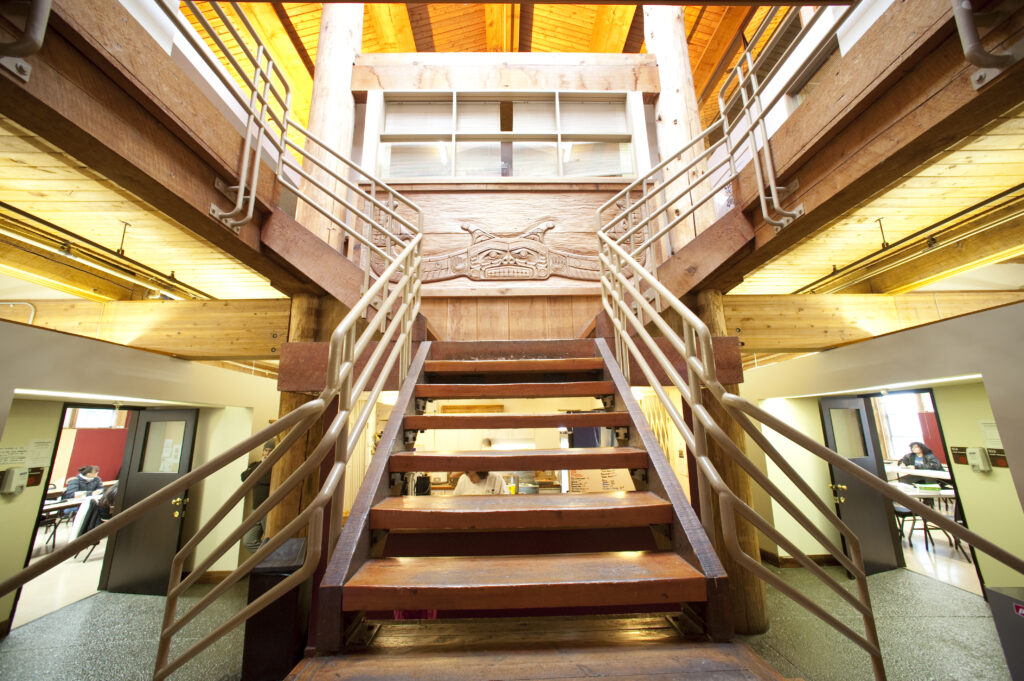
Longhouse Values
These original laws are embedded in every aspect of our House. They invite cultural identity and self-determination of Indigenous Peoples, which empowers learners to advance their unique personal and educational goals.